.avif)



Designing Between Concept and Code
For decades, the digital industry has treated design and development as separate disciplines. Designers create concepts, developers implement them, and somewhere between those stages a product eventually emerges. The process works, but it also creates a gap. Ideas are translated, interpreted, simplified, and occasionally lost altogether. As digital experiences become increasingly interactive, that gap becomes harder to ignore.
Many of the websites, products, and experiences that inspire people today no longer fit neatly into traditional categories. Their strength rarely comes from aesthetics alone or technology alone. Instead, it comes from the relationship between the two. The concept influences the implementation, while the implementation influences the concept. Rather than existing as separate stages of production, both evolve together throughout the process. This shift has quietly given rise to a discipline often referred to as creative development.
Beyond Static Design
One of the biggest limitations of traditional workflows is the tendency to treat design as a collection of static screens. While effective for many products, this approach begins to break down when interaction itself becomes part of the idea. Motion can establish hierarchy more effectively than typography. Timing can completely change the perception of a layout. A transition can communicate intent just as clearly as color, scale, or composition. Yet many of these decisions are still introduced after the design phase is considered complete, creating a disconnect between what was imagined and what users ultimately experience.
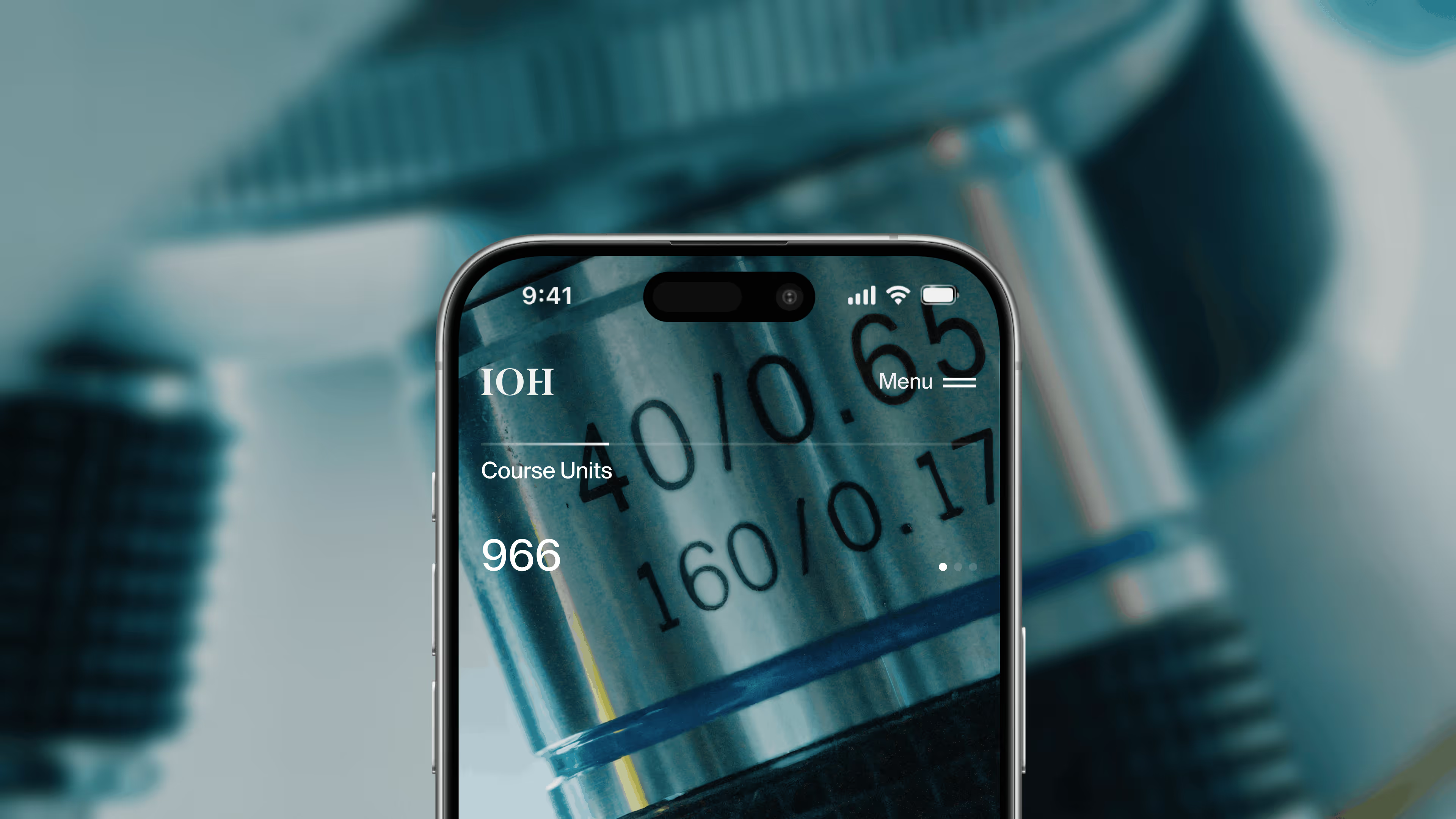
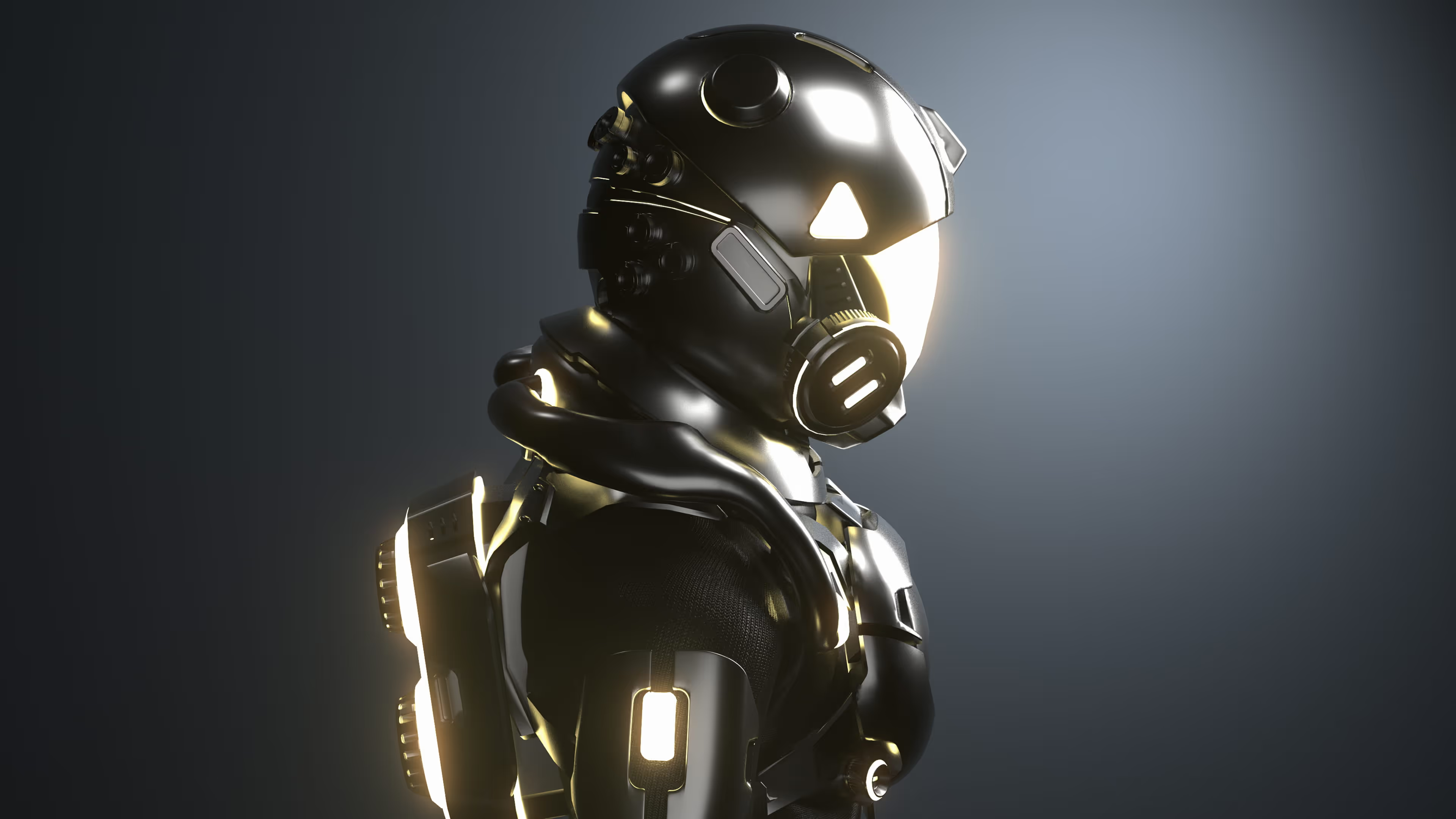
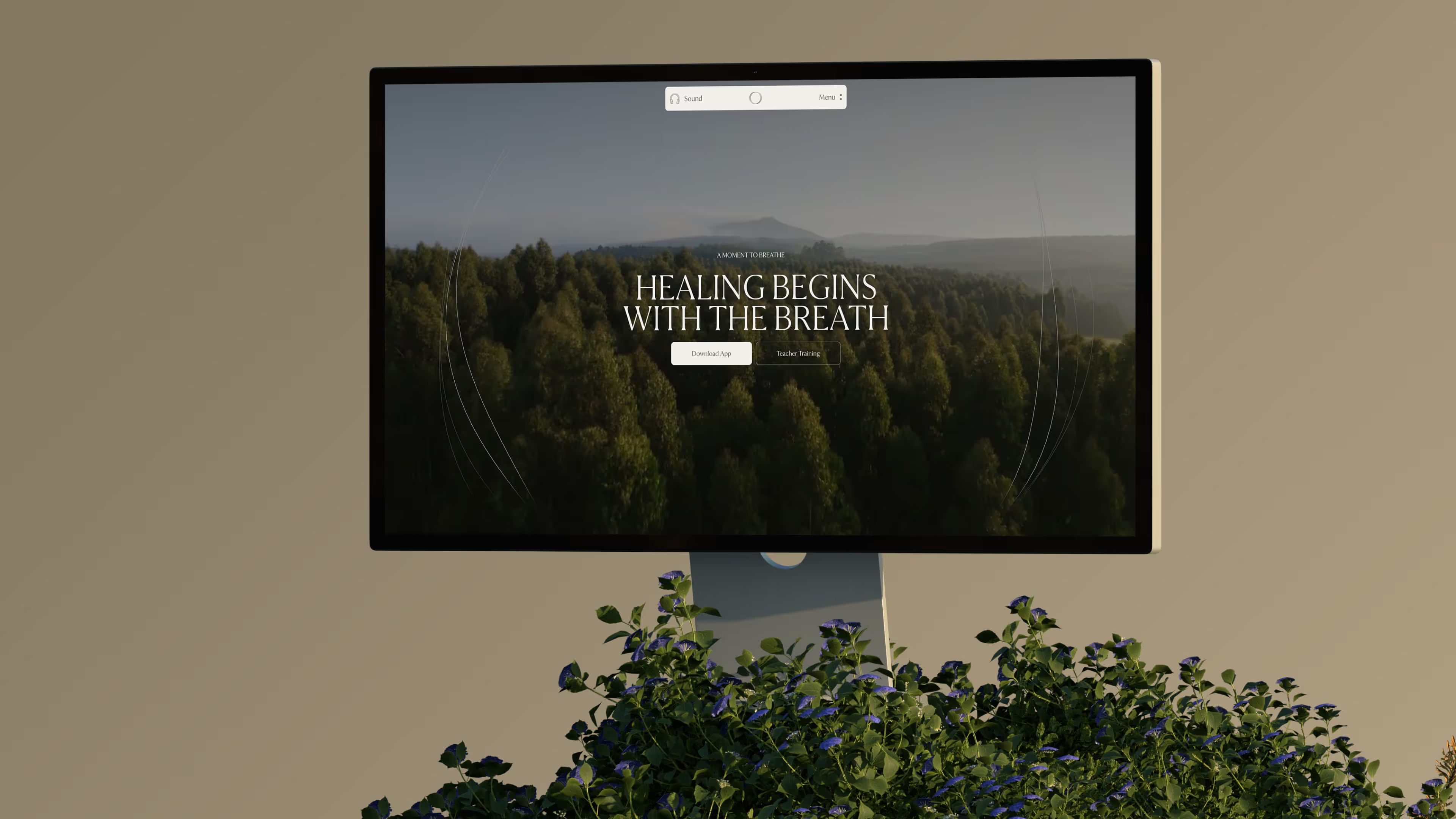
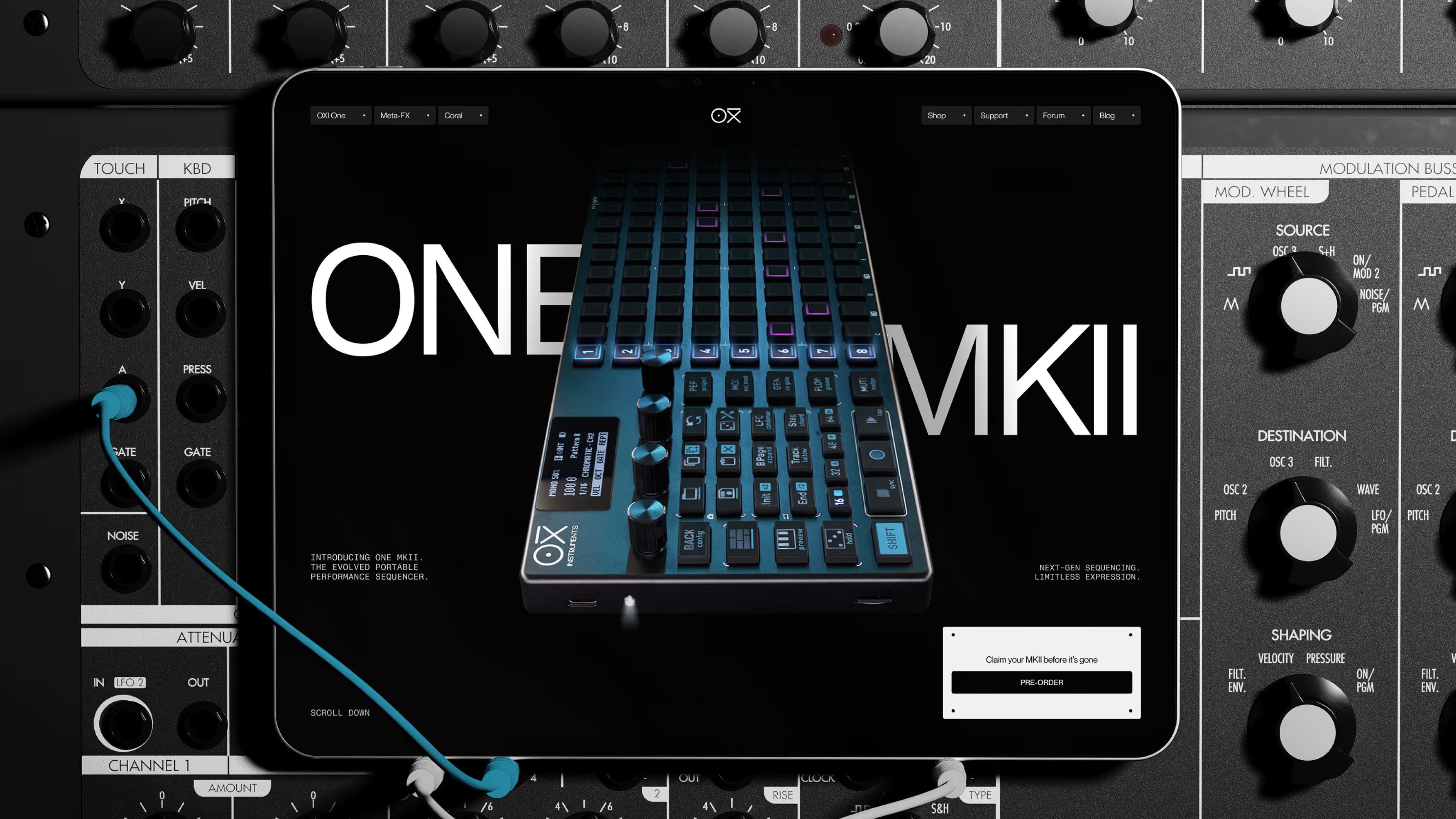
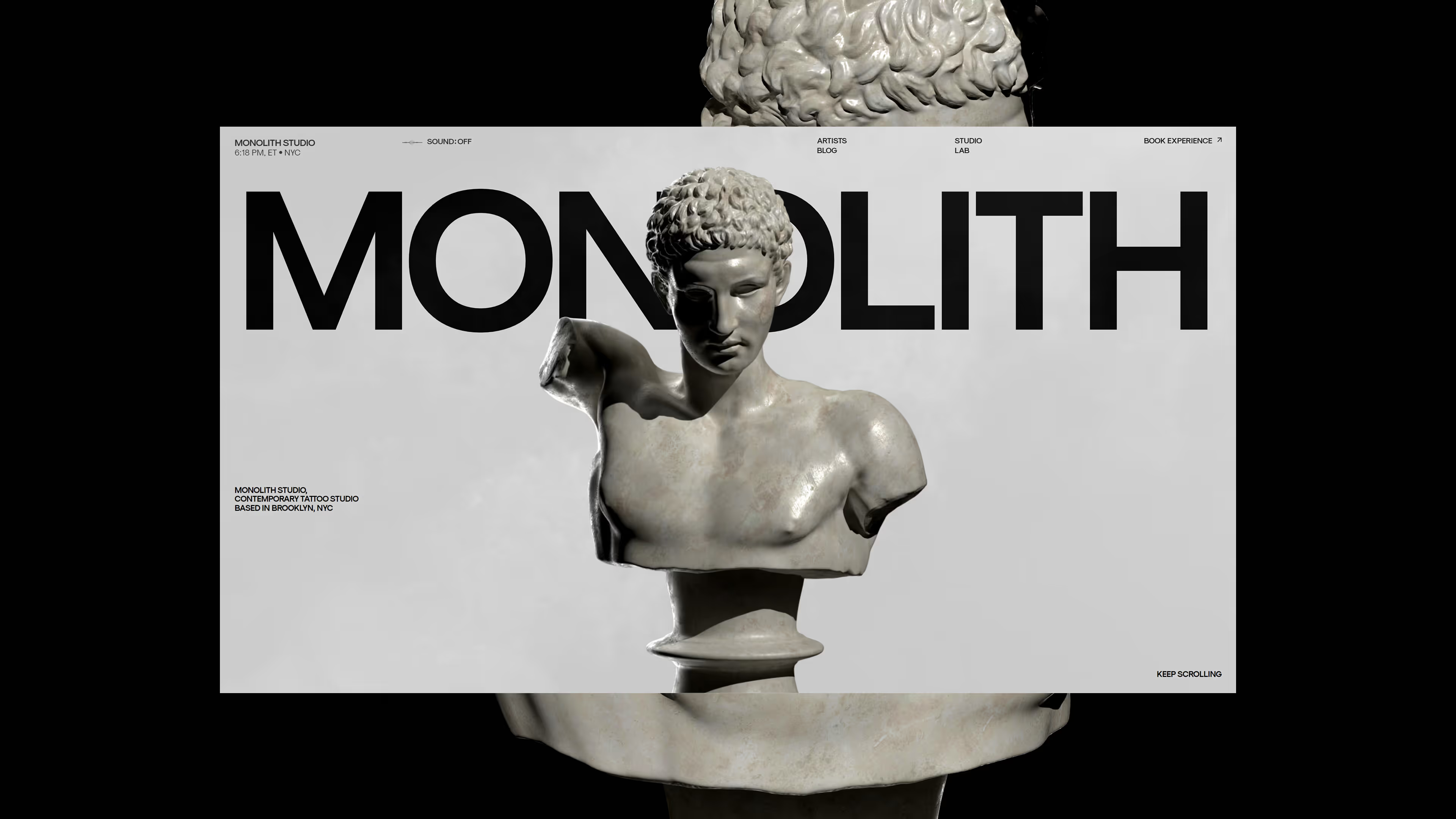
The projects that have influenced me the most rarely began with a visual style. They started with a question. How do you visualize an AI editor that understands rhythm and emotion? How do you translate the invisible process of breathing into a digital experience? How do you make a tattoo studio feel more like a cultural institution than a portfolio website? These questions cannot be answered through static layouts alone. They require experimentation, movement, prototypes, and often direct interaction with the technology itself before the final direction becomes clear.
As a result, design increasingly becomes less about arranging screens and more about designing behavior. The experience is no longer defined only by what users see, but by how content appears, reacts, transitions, and evolves throughout the journey. Some ideas only reveal their strengths when they move. Others only work when they respond to user input. Many cannot be properly evaluated until they exist inside a functioning environment.
The Rise of Creative Development
This is where creative development becomes particularly interesting. Not because it replaces design or development, but because it creates a stronger connection between them. Creative development exists in the space where visual thinking meets technical execution. It is less concerned with producing code and more concerned with understanding how ideas behave when they become interactive.
The distinction between designer and developer still exists, but it feels increasingly outdated. Some of the most exciting people in the industry today operate comfortably between disciplines. They understand visual systems, interaction design, motion, user experience, and implementation. They may specialize in one area, but they understand enough of the others to make stronger decisions. This does not mean every designer should become an engineer or every developer should become an art director. It simply reflects the reality that modern digital experiences are rarely created in isolation.
Many of the projects I enjoy most begin with experiments rather than finished designs. A technical prototype becomes a visual direction. A motion study becomes a concept. Occasionally a development limitation creates a stronger solution than the original idea. When concept and execution evolve together, the process becomes far more fluid. The strongest work often emerges from that dialogue rather than from a perfectly linear workflow.
Ideas in the Age of AI
Artificial intelligence is accelerating this shift even further. Design systems can be generated faster. Code can be written faster. Content can be produced faster. Production becomes increasingly accessible with every new tool that enters the market. Yet as execution becomes easier, ideas become more valuable.
The challenge is no longer building something. The challenge is deciding what deserves to be built in the first place. Technology can automate implementation and improve workflows, but it cannot replace perspective, taste, or the ability to uncover a meaningful concept hidden inside a problem. As production costs continue to decrease, conceptual thinking becomes one of the few advantages that cannot be easily replicated.
This is perhaps the biggest misconception surrounding AI. Many people view it primarily as a threat to creative work, while in reality it is increasing the importance of creativity itself. When everyone gains access to similar tools, the differentiator shifts away from execution and toward vision. The question becomes less about how quickly something can be made and more about whether it is worth making at all.
Looking Forward
The future of digital experiences will likely belong to teams and individuals capable of moving comfortably between concept and execution. Not because specialization disappears, but because the distance between disciplines continues to shrink. The most compelling products, websites, and experiences are rarely the result of design alone or development alone. They emerge from the dialogue between the two.
Design provides direction. Development provides possibility. The most interesting work happens where they meet.