.avif)



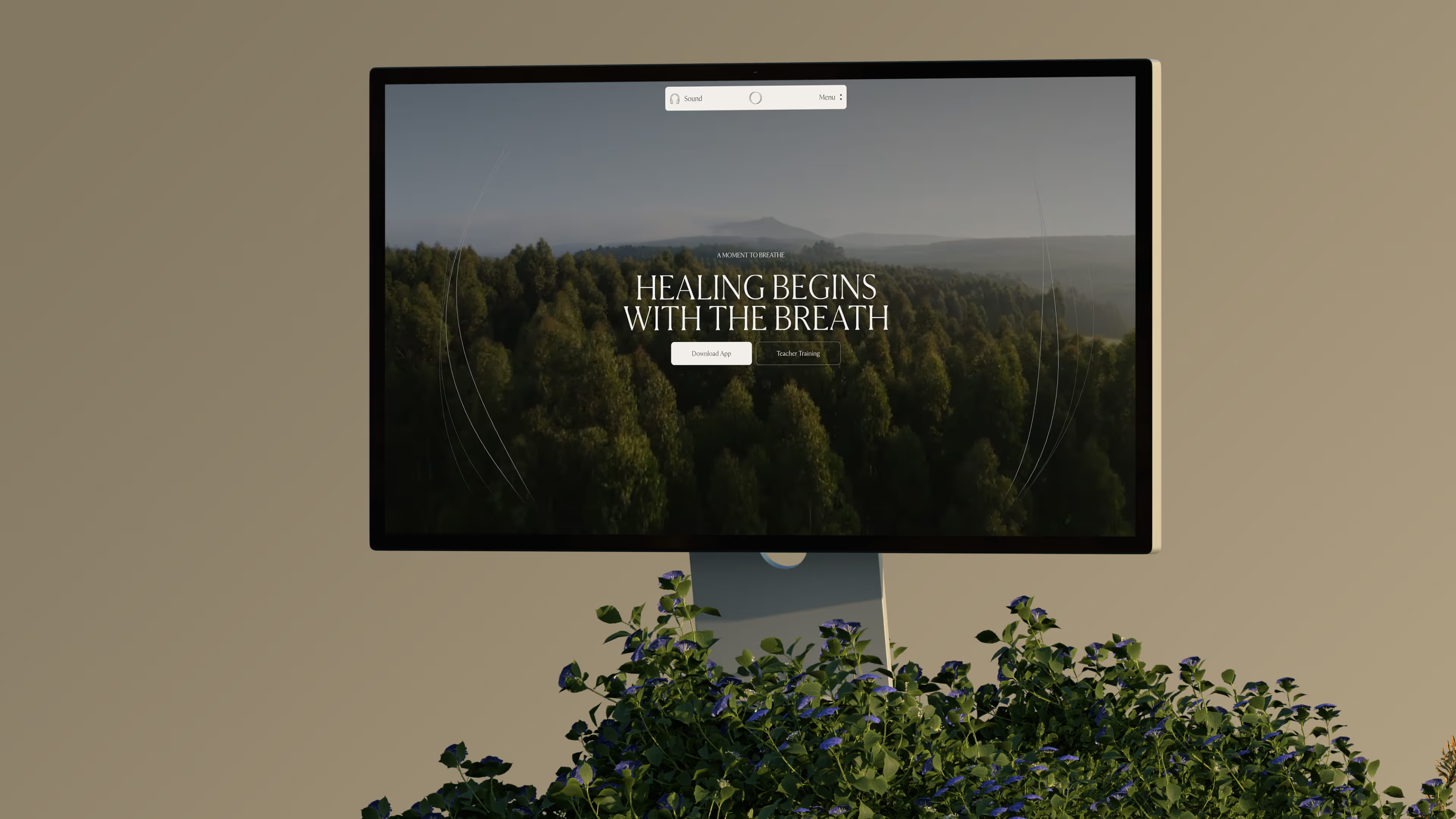


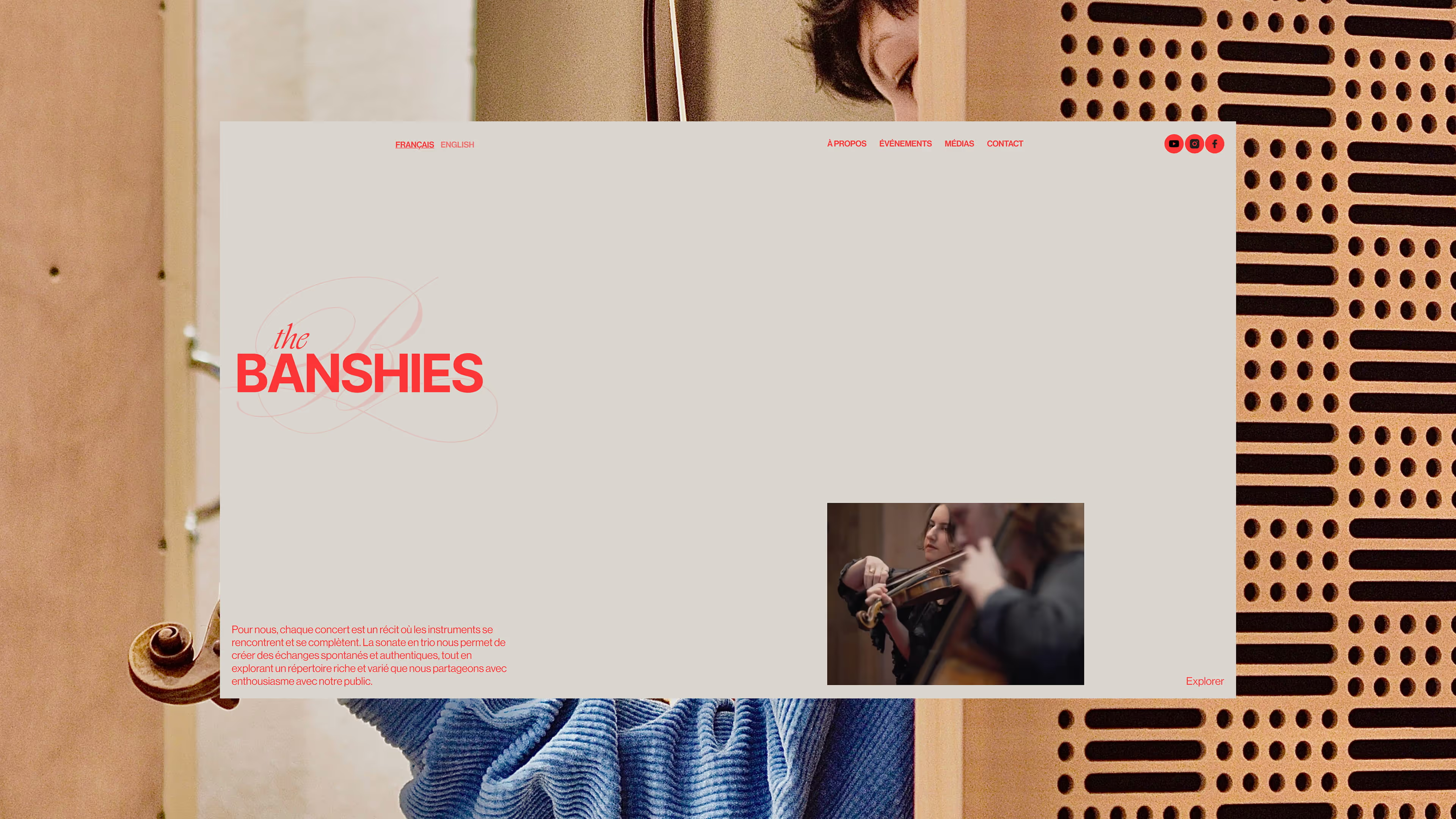


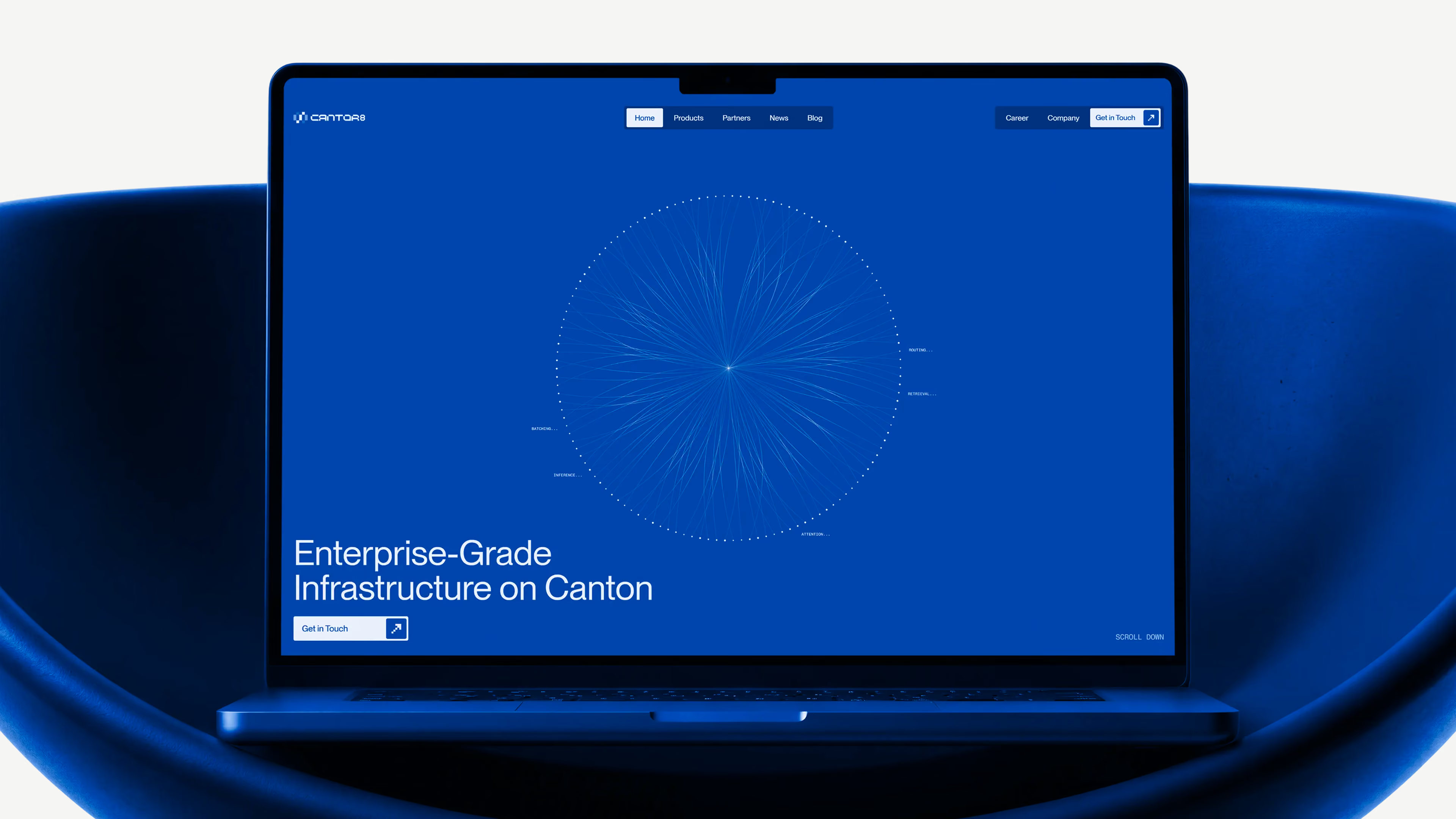
Designer of the Year '24
In 2024, I was named Designer of the Year by CSS Design Awards. For a long time, awards felt like distant milestones. The kind of achievements you admire from afar while assuming they belong to someone else's career. Like many designers, I spent years looking at winning projects, studying portfolios, analyzing interactions, and wondering what separated those people from everyone else. Eventually, after enough projects, enough late nights, enough failed concepts, and enough iterations, I found myself on the other side of that equation.
The Myth of Arrival
One of the biggest misconceptions in creative industries is the belief that success arrives as a moment. We imagine there will be a project, a client, an award, or a number that suddenly changes everything. We expect confidence to appear, uncertainty to disappear, and validation to feel permanent. Reality is far less dramatic.
The morning after receiving the award looked almost identical to the morning before it. Emails still needed answers, projects still required decisions, and clients still needed solutions. The award didn't suddenly make me a better designer, attract an entirely different class of clients, or remove uncertainty from the creative process. It simply acknowledged work that had already been done. Looking back, that realization became one of the most valuable lessons hidden behind the recognition itself.
Creative industries often encourage people to think in milestones. The next client, the next award, the next feature, the next promotion. We convince ourselves that a certain achievement will finally provide a sense of arrival. Yet every time one of those milestones is reached, the horizon simply moves further away. There is always another project, another challenge, another goal. The destination keeps changing because growth itself has no final destination.
What Actually Changed
While the award didn't transform my career overnight, it did change something more subtle. It changed the way I think about recognition.
For years I treated awards as proof. Proof that the work was good enough. Proof that I belonged in the industry. Proof that I was moving in the right direction. Winning Designer of the Year forced me to confront an uncomfortable truth: external validation is temporary by nature. The excitement fades. Social media moves on. New winners are announced. The industry quickly shifts its attention elsewhere.
The projects that mattered before the award continue to matter after it. The lessons remain. The mistakes remain. The experience remains. The more I reflected on the recognition, the more I realized that the projects themselves had always been the real reward. The award simply happened to be a visible outcome of years spent refining ideas, improving execution, and learning through repetition.
Ironically, letting go of the need for validation made the work more enjoyable. Decisions became less focused on what might impress judges and more focused on what would create a stronger experience for users and clients. The pressure of proving something gradually gave way to the freedom of simply building better projects.
The Pressure of Recognition
There is another side to recognition that people rarely discuss. Awards create expectations. Before receiving industry recognition, it is easy to believe that stronger work belongs to people who are more talented, more experienced, or working with bigger teams. Those explanations become harder to rely on once your own work starts receiving attention. The challenge changes. The goal is no longer creating one successful project. The goal becomes maintaining a level of quality over time.
Consistency is significantly harder than breakthrough moments. A single successful project can happen under the right circumstances. A decade of successful projects requires a completely different mindset. It demands discipline, curiosity, and the ability to keep improving long after the excitement of recognition has disappeared. In many ways, awards increase responsibility rather than reducing it. They raise expectations, not only from others, but from yourself.
Looking Back
When I think about the projects that contributed to Designer of the Year, I rarely think about the awards attached to them. I think about difficult conversations with clients. I think about concepts that failed completely. I think about presentations that required dozens of revisions before reaching the right direction. I think about technical challenges that initially seemed impossible to solve.
Every successful project is built on a foundation of discarded ideas. The final result is usually the visible ten percent. The remaining ninety percent exists only in drafts, experiments, iterations, and mistakes that nobody ever sees. Awards tend to celebrate outcomes because outcomes are visible. Growth happens somewhere else entirely.
The older I get, the more convinced I become that the process is the only part we truly control. We cannot control how projects are received, how industries evolve, or how recognition is distributed. We can only control the effort, curiosity, and attention we bring to the work itself. Everything else exists outside our influence.